

The K-Pop Problem
...is really just the stan culture problem.
Fan (stan) meltdowns are a dime a dozen and not always worth talking about. When BTS fans turned on the scrobbling site Last.FM recently, I hoped that someone else would cover it and Idolcast Podcast came in clutch, summarizing the situation succinctly, and I recommend reading her piece to understand the controversy.
But I keep thinking about one of the recurring complaints from the fans, namely that the Last.FM moderators talking about “the Kpop problem” is what they took offense to because it’s racist and xenophobic.1 I don’t often normally wade into the K-pop waters because I feel others are far more adept at covering the topic, but this complaint and what is actually referred to as “the Kpop problem” is worth exploring, because it’s not actually about K-pop: it’s about stan culture.
Ten to fifteen years ago, this could’ve been called the One Direction problem, but 1D fans weren’t relying on Last.FM because the statistics are ultimately meaningless to leaving a mainstream imprint and can only be used to signal status among fans. But status signalling does matter to fans, these days. That just goes to show the acceleration of stans co-opting normie spaces, rendering them useless to the majority of users. Because that’s another thing: the way the most devoted fans will compete with one another about how devoted they are and just how much they’ve contributed to their fave’s success.
Don’t you want to give back? Their win is your win, and if you can’t help just a little bit, then you’re not really a fan, are you?
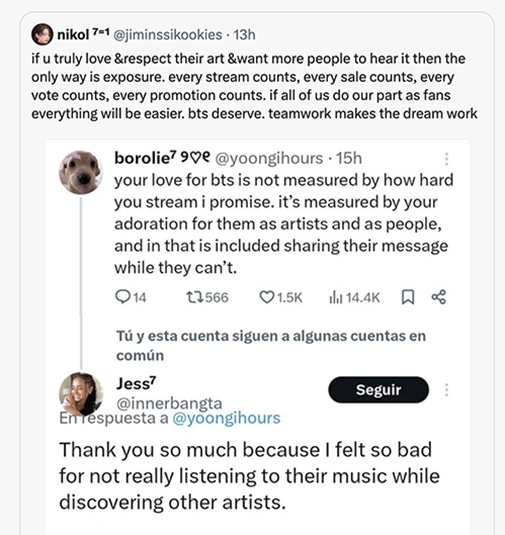
Currently, K-Pop and BTS are where this expression of stan culture is the most noticeable. It is nowhere near the only fandom that behaves this way, they are the tip of the iceberg, if you will. Smaller fandom communities also engage in this anti-social behaviour, but they don’t reach critical mass in a way that disrupts the mainstream; it’s too dispersed to be seen as anything other than isolated bad behaviour that shouldn’t be highlighted. This is an attitude I’ve argued against for years because if thousands of micro-cults are out there it still impacts culture and the way that fandoms operate, even if it doesn’t disturb the casual listeners and enjoyers’ experience.
Because BTS are in an active cycle of album release and touring, they are the ones called out. But it’s also true that the world of K-pop and the Asian entertainment industry has been ahead of the curve when it comes to encouraging this, both from official sources and pressure within fandom.
BTS are also worth highlighting because they have such a high percentage of so-called superfans (aka stans). Most of the data about superfandom emphasizes that this cohort typically makes up one percent of any given fanbase. But according to BTS’ label, their superfans make up a whopping nine percent of the fanbase. This means they can make much more noise and be much more disruptive than your average stans. It’s why Last.FM had to adjust their algorithm and why the sites that the fans left for have felt the burden of too much activity and load.
So let’s look at some of the ways that this has played out in K-pop fandom to understand not only what the problem is, but what is also going on below the surface for a plentitude of artists:
Buzzfeed wrote about fans manipulating streams on Spotify in 2018, iTunes charts were also noted to be vulnerable to fan manipulation that year.
Stereogum noted that charts were being rendered useless by BTS fans in 2021.
There have been arrests for fans dumping bulk bought albums, as far back as 2017, with the article mentioning this has been an issue for years.
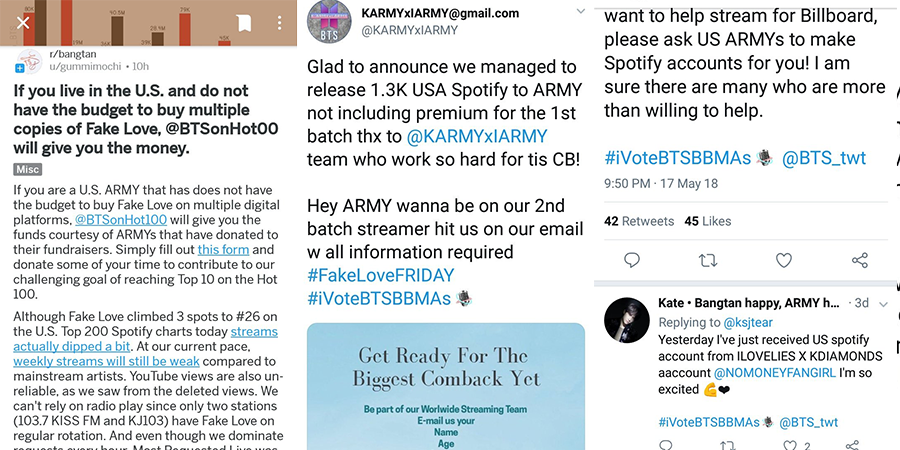
Fan sites organize bulk buyouts of albums to help secure chart positions.
Seventeen’s albums were being thrown away in bulk in Japan because of being bulk purchased and this wasn’t the first time.
In 2023, Korean newspaper Cho Sun reported on the massive amount of discarded bulk bought albums, saying it resulted in as much as 801.5 tons of waste.
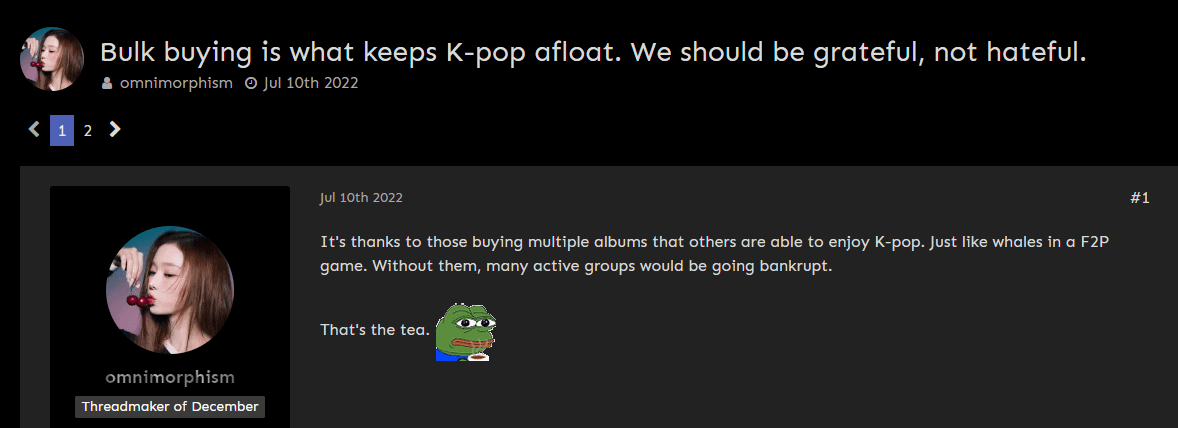
K-pop fans defend it because it allows their idols to keep going. So-called whales, big spenders, devotees, superfans, are needed for the more casual fans to benefit from more content and more visibility and a continued career for the fan object. As Idolcast said, “Stans caught up in the metrics cargo cult will claim that faking big metrics is how to support their favorite artist to ensure a steady supply of content in the future.” And it goes so far beyond K-Pop, as I’ve written about before, but been accused of nutpicking because it’s seen as an anomaly rather than the norm.
Financial devotion like this makes me think more and more we’re dealing with corporate cults, and each time someone in the industry writes that the solution to the death of mainstream is to lean into superfandom and 100 true fans, the clearer it is that this is an expression and the desired outcome of the affect that is mined and encouraged.
If I wanted to include every instance of fans rallying to stream more, buy more for the goal of being a good fan, this post would be too long for email and it would be repetitive beyond belief. It’s not a secret that this is how a core group of fans behave, and to pretend otherwise is beyond disingenous. To claim bigotry when this is pointed out is manipulative.
Again: this is not a BTS or K-pop exclusive problem. They are simply ahead of the curve on the commodification of fandom as well as incredibly active presently.
Patrick St. Michel has written extensively about the Japanese music industry and fandom and coined the expression “everything is AKB48” to explain the way fandoms and industry across the world is adopting an approach that feeds this behaviour. I highly recommend reading his work to understand where this is coming from, and how it expresses itself in Japan to get where we’re headed.
As I said: fifteen years ago this would’ve been called the One Direction problem, because their fanbase was at the forefront of today’s stan culture and indebted devotion in the West. The K-pop problem is the superfan problem, the stan culture problem, the corporate cult problem. It overwhelmingly benefits the corporations that are on the receiving end of the support and are a liability to everyone else.


This is an example of something I like to call the memeing of bigotry, and it’s too big of a topic for today, but anyone who has witnessed stan meltdowns and arguments should be familiar with the deployment of such accusations.